
Liberty County Weekly Arrest Log
For multi-day coverage, start with the CLJNews Arrest Log category. Its front page files Liberty and Calhoun items under dated headings. Entries arrive in batches with gaps. This is not a live jail feed. The publication can help you pin down a date and a reported charge. It cannot settle who is in custody now. LCSO keeps the official booking and arrest records for the county. The sheriff site lists no public roster at present. CLJNews is independent news; the jail answers official record questions.
Read Liberty’s Multi-Day Blotter
Read from publication context back to an official source. A fresh heading is never a full count of county arrests.
- Open the CLJNews category and note its article title and update date.
- Find the separate Liberty County heading; Calhoun entries are another jurisdiction.
- Record the reported arrest date, charge wording, and agency without assuming current custody.
- Use the LCSO records portal for the official record.
- Use Clerk OCRS for docket events and disposition.
Need something from today? The daily arrest report path covers the faster custody checks.
Fields in Liberty Arrest Logs
CLJNews entries give a compact news summary. The official jail record may hold more detail, and the digital log is not a mugshot grid.
| Log element | How to read it |
|---|---|
| Dated section | The publisher’s grouping, not proof of posting time. |
| Name | The reported identity, which should be checked against an official record. |
| Charge description | An charge as reported, not a conviction. |
| County heading | Separates Liberty reports from neighboring Calhoun reports. |
| Agency context | May identify LCSO or another reporting agency. |
| Photograph | Not a routine feature of the current digital log. |
For bond, a booking number, release method, or an intake photo, ask LCSO for that booking record.
Liberty Weekend Posting Gaps
LCSO publishes no set schedule, and CLJNews works in batches. A Monday update may bundle several earlier dates. A holiday widens the gap. A batch drop is not an arrest surge. Only official data across a defined date range shows a trend. The FDLE arrest dashboard suits trends better. It posts facility-reported adult arrest data through the prior day, with filters and exports, though it is not a custody list. The county arrest overview maps each source to its stage.
Liberty Arrest Log Archives
The UF Digital Collections archive keeps older Calhoun-Liberty Journal issues. Historic editions reveal past arrest-log and sheriff-log formats. They are newspapers, though. Not a custody list. CLJNews says print stopped in 2022 while its site carried on. Florida GS2 separates record series by rule. Commitment and release lists must be kept at least a year past release; jail docket books are permanent; daily headcounts last at least one fiscal year. Those minimums do not promise web access. Ask LCSO by name, date, and record type. The local archive interface appears below, with names and photos left out.
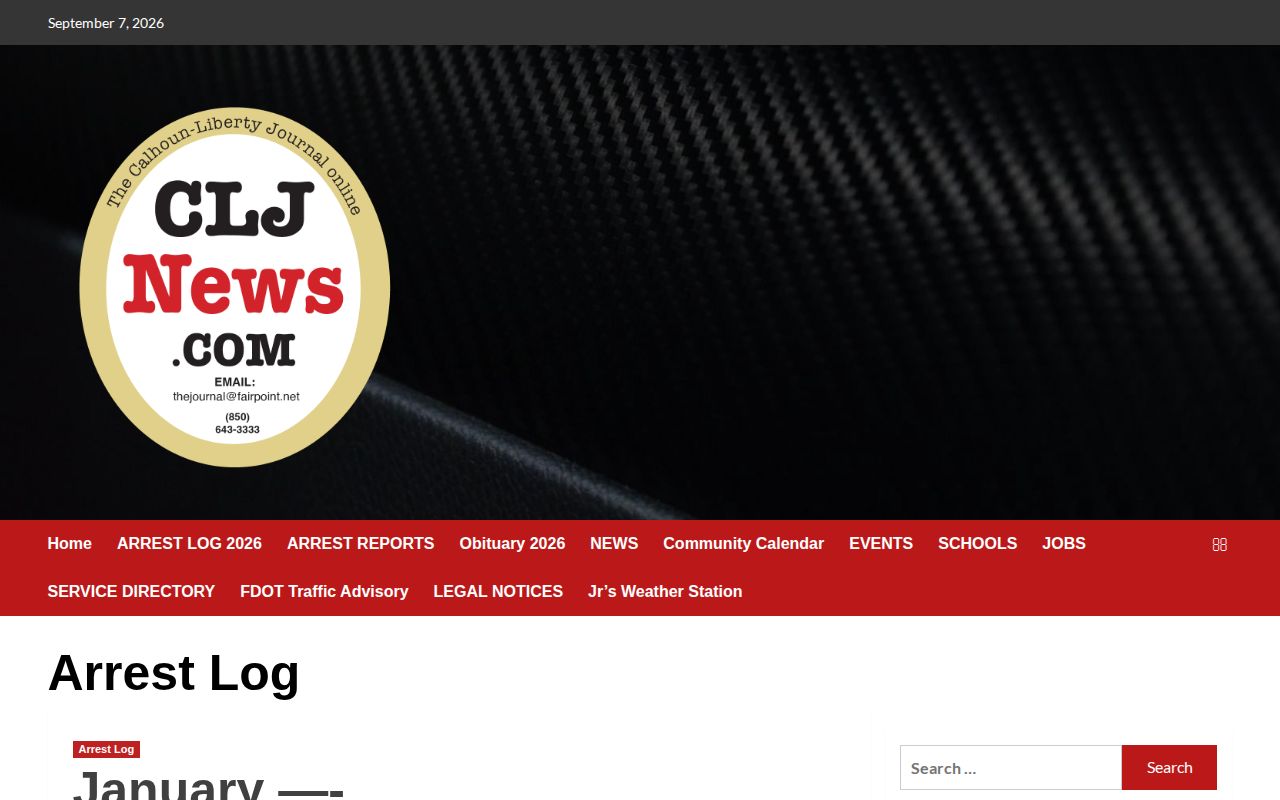
The capture documents the archive route, not anyone’s custody status.
Liberty Arrest Reports in Depth
Longer narratives live on the separate CLJNews Arrest Reports page, built from local reporting and agency material. Regional outlets cover Bristol incidents when news warrants. Both choose which events to cover. Neither is a complete log. An article can stay online after charges change or a release happens. The Clerk holds the case outcome; LCSO holds the report. The local narrative source appears below.
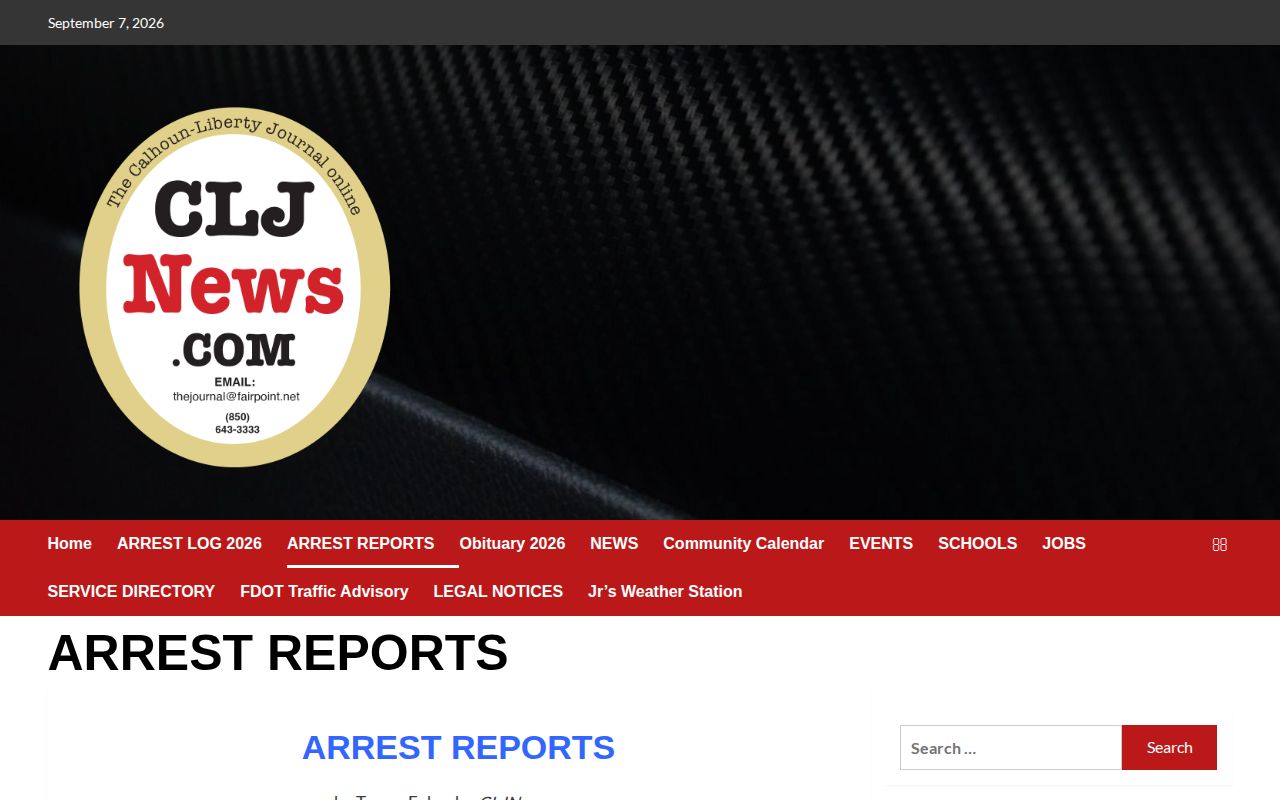
The capture gives newsroom context while official agencies remain authoritative.
Why Liberty Has No Official Blotter
The sheriff home page mentions booking reports in passing. The visible menu offers no working log. Searches for booking reports, arrest reports, arrest logs, inmate search, jail roster, and roster all returned errors. Treat that as a real gap. Do not guess a vendor address to fill it. A restored official page could change things. Later, confirm any page belongs to LCSO. Note its update label. Check whether it lists current detainees, all bookings, releases, or a fixed date range; those are different things. See whether photos appear and whether entries vanish after release. Until then, the chain stands: CLJNews for discovery, LCSO for the record, VINELink for custody data, and the Clerk for the case. One source's gap settles nothing.
Requesting Older Liberty Arrest Logs
Request a record series, not just an old web page. Useful terms include commitment and release list, jail docket entry, daily headcount record, arrest report, and booking or intake record. Give a narrow date span. If the exact record is unclear, ask the custodian to name the series holding the booking and release details. Florida's retention schedule sets minimum periods only. A litigation hold, open request, audit, or agency choice can extend them. A newspaper archive, meanwhile, may preserve a story even after the government record leaves the web. The two copies differ in authority. Cite them separately. If LCSO withholds part of a record, ask for the exemption. Then request a redacted copy of the rest. A missing photograph does not sink the booking fields. Dates, agency, booking number, release method, and court return can still lead to the case history.
Liberty Blotter Versus Roster
Three different lists answer three different questions. A blotter, like the one CLJNews keeps, gathers Liberty County arrests across a stretch of days. A custody roster shows who sits in the jail at one moment, and the LCSO site does not publish that kind of list. Movement in and out of booking shows up on commitment-and-release records instead, which LCSO hands over on request.
Mixing these up breeds bad conclusions. A man released hours ago can still sit in a newspaper log, and a detainee transferred into the jail may never show up as a fresh Liberty County arrest. So check the label. Then check the date.